If you are missing one tooth, several teeth, or an entire arch, dental implants give you back a smile that looks, feels, and functions like your own. As part of the general dentistry care we provide at In Smyle Dental, implant treatment addresses both the health consequences and the confidence loss that come with missing teeth. For patients searching for a trusted emergency dentist in Chicago after losing a tooth to trauma or decay, implants are often the most durable long-term answer we can offer.
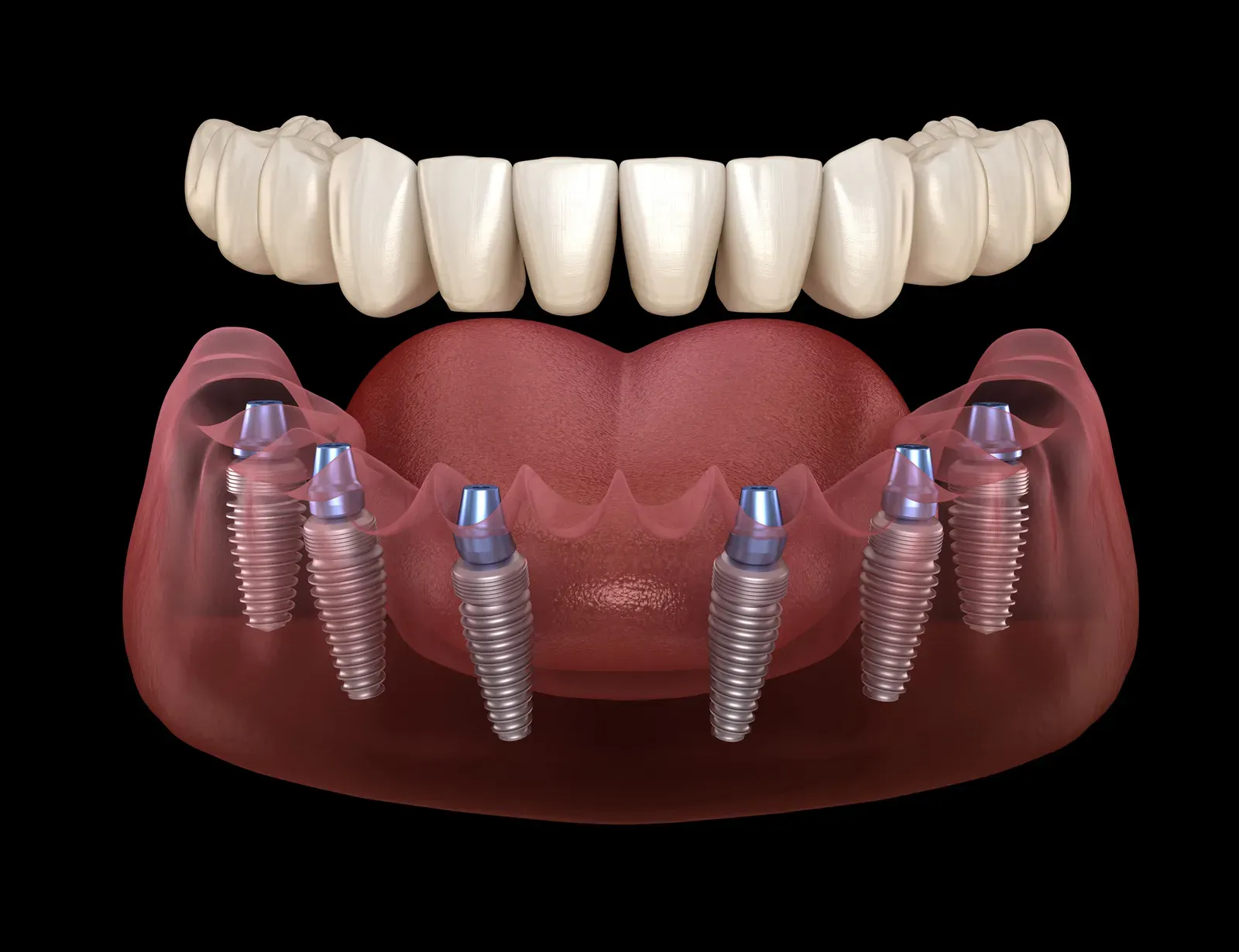
Unlike dentures or bridges, which sit on top of the gums or rely on neighboring teeth for support, a dental implant replaces the entire tooth structure, including the root. A titanium or zirconia post is placed directly into the jawbone, where it fuses with the bone over several months through a process called osseointegration. Once integrated, it provides a foundation as strong and stable as a natural tooth root, capable of supporting a crown, bridge, or full denture for decades of reliable use.
Missing teeth rarely stay a cosmetic concern for long. Left untreated, gaps in your smile can lead to bone loss, shifting teeth, and a bite that gradually falls out of balance. Many of our Chicago patients come to us after years of avoiding the problem, only to discover that nearby teeth have drifted or that chewing has become uncomfortable. Recognizing the warning signs early makes treatment simpler and helps protect your remaining natural teeth.
Most healthy adults missing one or more teeth are good candidates for implants, but every case deserves a thorough evaluation before we recommend treatment. We review your dental and medical history, take detailed imaging of your jawbone, and discuss your goals before mapping out a plan tailored to your mouth. Factors like bone density, gum health, and overall health conditions all play a role in determining the right approach and timeline for your treatment.
Patients sometimes assume that bone loss, gum disease, or age rule out implants entirely. In reality, many of these obstacles can be addressed with preparatory procedures such as bone grafting or periodontal therapy, opening the door to implant treatment that might otherwise seem out of reach. Our team will always be honest with you about whether implants are the right fit, or whether another restorative option makes more sense for your situation.
No two smiles are identical, so we never apply a one-size-fits-all approach to implant dentistry. Whether you're replacing a single tooth or rebuilding a full arch, our team selects the technique and materials best suited to your bone structure, bite, and budget. We walk you through each option in plain language so you understand exactly what to expect before we move forward.
Replacing a missing tooth is about far more than appearance. The jawbone needs the stimulation of a tooth root to maintain its density, and without it, bone resorption begins within months of tooth loss. Implants are the only replacement option that recreates this stimulation, which is why patients who choose implants typically preserve more facial structure and jaw strength over the years compared to those who choose a bridge or denture alone.
Healing after implant placement happens in stages, and understanding what to expect helps patients feel confident throughout the process. The initial surgical site typically feels tender for several days, similar to recovery after a tooth extraction, and most patients return to normal routines within a few days. The deeper healing, where the implant fuses with the jawbone, takes several months, which is why we space out the surgical and restorative phases of treatment.
Once your implant is fully integrated and restored with a crown, bridge, or denture, caring for it is remarkably simple. It becomes part of your daily hygiene routine just like your natural teeth, and with consistent care, there is no reason it shouldn't serve you well for many years to come.
Implant treatment unfolds in a series of carefully sequenced steps, and we explain each one before you decide to move forward. While the overall timeline varies from patient to patient, most treatment plans follow this general path.
We begin with a detailed exam, digital X-rays, and 3D imaging to assess your jawbone, gum health, and bite. This allows us to map out implant placement with precision before any treatment begins.
If imaging shows insufficient bone volume or active gum disease, we address those issues first through grafting or periodontal therapy, giving the implant the strongest possible foundation.
Using local anesthesia and careful technique, we place the titanium or zirconia post into the jawbone at the planned site. Most patients describe the procedure as comparable to a routine extraction.
Over the following three to six months, the implant fuses with the surrounding bone. We monitor progress with follow-up visits to confirm the implant is integrating properly.
Once healing is complete, we attach a small connector called an abutment and take impressions for your custom crown, bridge, or denture, crafted to match your natural teeth.
Your final restoration is fitted, adjusted for comfort and bite alignment, and secured in place. We schedule follow-up visits to confirm everything is functioning exactly as it should.
Choosing where to have implant surgery performed matters as much as choosing the treatment itself. At In Smyle Dental, implant dentistry is woven into our broader general dentistry practice, which means your implant treatment is coordinated with the rest of your oral health care rather than handled in isolation. Patients throughout Chicago trust us for both routine family dentistry and more advanced restorative work, including implant placement and emergency dental care.
With proper care, the titanium implant post can last a lifetime since it fuses directly with your jawbone. The crown, bridge, or denture attached to it typically lasts 10 to 15 years or longer before it may need replacement due to normal wear.
Most patients are surprised by how manageable the procedure is. We use local anesthesia during placement, and any post-surgical soreness is typically mild and controlled with over-the-counter or prescribed pain relief for a few days.
Cost depends on the number of implants needed, whether bone grafting is required, and the type of restoration involved. During your consultation, we provide a detailed breakdown and discuss financing options so you understand your full investment before beginning treatment.
Age alone rarely disqualifies someone from implant treatment. Many older adults are excellent candidates, and if bone density is a concern, bone grafting procedures can often rebuild the jaw enough to support an implant successfully.
From initial consultation to final restoration, treatment typically takes three to eight months, depending on healing time and whether preparatory procedures like grafting are needed. We outline a personalized timeline during your first visit.
Yes. As an emergency dentist serving Chicago, we evaluate the injury promptly, stabilize the area, and then discuss timing for implant placement once the site has healed enough to support treatment safely.
Gentle, modern dental care for the whole family. Schedule your visit with In Smyle Dental today - we can't wait to welcome you.